Crimson Desert Review: A Brutal, Beautiful Evolution of Open-World RPGs
Overview
Crimson Desert is an ambitious open-world action RPG that blends cinematic storytelling with a dynamic combat system and a living, breathing world. Set in the war-torn continent of Pywel, the game follows Kliff, a hardened mercenary navigating political unrest, personal demons, and a fractured brotherhood. It aims to bridge the gap between narrative-driven RPGs and high-intensity action titles, and in many ways, it succeeds.
Gameplay and Mechanics
Crimson Desert’s gameplay is defined by its fluid, weighty combat system that emphasizes timing, positioning, and adaptability. Unlike traditional RPGs that rely heavily on stats, Crimson Desert leans into skill-based combat. Players can chain together melee attacks, grapples, aerial combos, and environmental interactions in a way that feels closer to a hybrid of character-action games and grounded realism.
Combat encounters are varied and often unpredictable. Enemies react dynamically, and boss fights feel like multi-phase duels that test both reflexes and strategy. The physics-driven elements, such as throwing enemies into objects or using terrain to your advantage, elevate the moment-to-moment gameplay.
Outside of combat, the game offers a wide range of activities including exploration, survival mechanics, and light resource management. Traversal is another highlight, with seamless climbing, gliding, and horseback riding that make navigating Pywel engaging rather than tedious.
World Design and Exploration
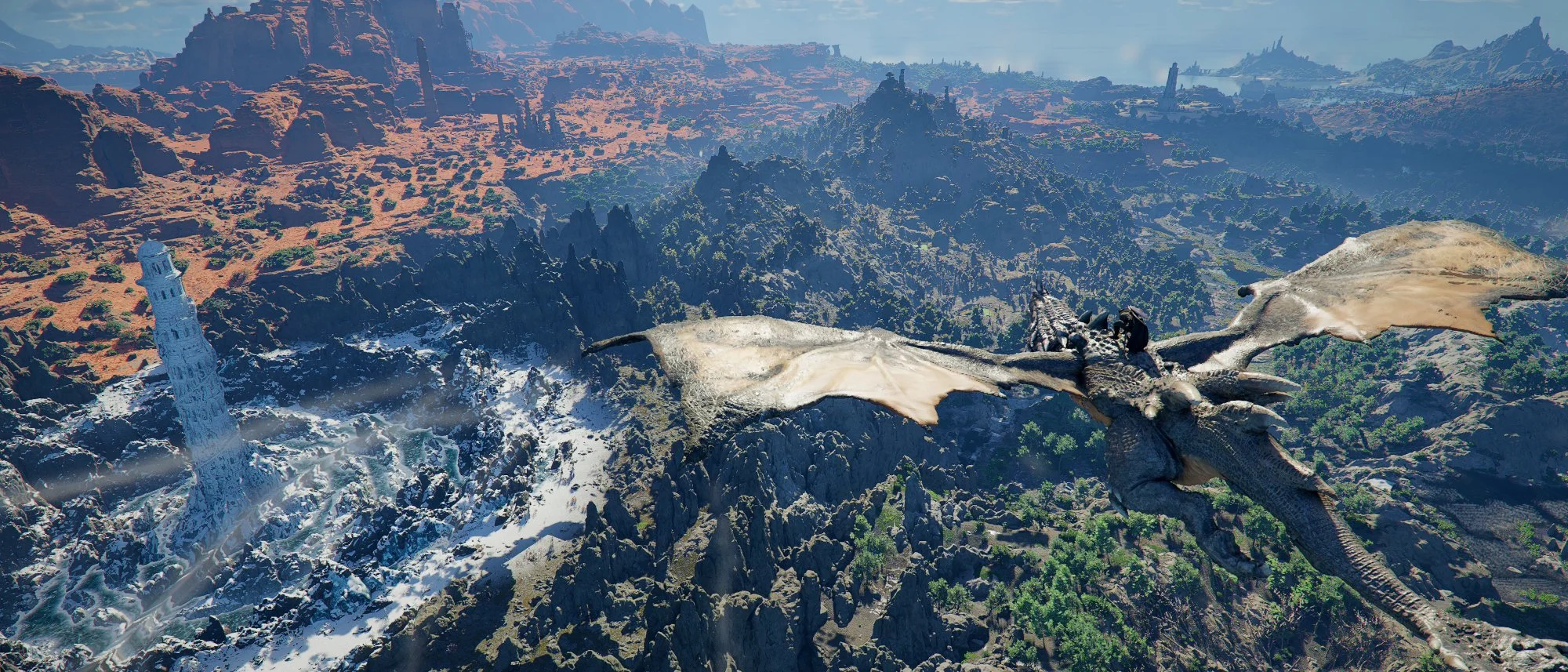
The world of Pywel is one of Crimson Desert’s strongest achievements. It is vast, diverse, and filled with emergent events that make exploration feel organic. From sprawling deserts to snow-covered mountains and dense medieval cities, each region has its own identity and narrative context.
What sets the world apart is its sense of dynamism. NPCs follow routines, factions clash in real time, and environmental changes can alter gameplay conditions. This creates a sense that the world exists independently of the player, a hallmark of truly immersive open-world design.
Story and Narrative
Crimson Desert delivers a grounded, character-driven story that explores themes of loyalty, betrayal, and survival. Kliff is not a traditional hero; he is flawed, burdened by past decisions, and constantly navigating moral gray areas. His journey is intertwined with a band of mercenaries, each with their own motivations and backstories.
The narrative unfolds through cinematic cutscenes and in-world interactions, maintaining a strong pacing that balances action with emotional depth. The writing avoids cliché fantasy tropes, opting instead for a more mature and nuanced approach.
Lore and Worldbuilding
The lore of Crimson Desert is deeply embedded in its world rather than delivered through exposition. Players uncover the history of Pywel through environmental storytelling, side quests, and scattered documents. The continent’s political tensions, ancient conflicts, and cultural divisions are all reflected in the environments and characters.
This approach to lore rewards curiosity. Those who take the time to explore and engage with side content will find a richly layered world with a sense of history and consequence.
Game Length and Replayability
Crimson Desert offers a substantial amount of content. Completing the main story typically takes around 80 to 120 hours, depending on playstyle and difficulty. Players who engage with side quests, exploration, and optional activities can expect a total playtime ranging from 100 hours or more.
Replayability is driven by the game’s open-ended structure and the variety of ways encounters can unfold. Different combat approaches, exploration paths, and narrative choices provide incentive to revisit the world.
Performance and Presentation
Visually, Crimson Desert is stunning. The game leverages advanced lighting, detailed character models, and large-scale environments to create a cinematic experience. Animations are fluid, particularly in combat, where every strike and movement carries weight.
The soundtrack complements the tone of the game, shifting seamlessly between intense battle themes and atmospheric exploration tracks. Voice acting is strong across the board, adding authenticity to the characters and their interactions.
Verdict
Crimson Desert stands as a bold evolution in the open-world RPG space. It successfully combines visceral combat, meaningful exploration, and a mature narrative into a cohesive experience. While some systems may feel overwhelming at first, the depth they provide ultimately enhances the game’s longevity and impact.
The game is not without minor flaws, particularly in pacing during certain segments and occasional mechanical complexity, but these do little to detract from the overall experience.
Final Score: 9.2/10 — Crimson Desert delivers a powerful, immersive RPG experience that sets a new benchmark for the genre.